Project
ARD Smart shop is a startup that helps small local shops
To sell their products in a more effective way
The main concept is that customers can search for and buy premium
Products in their area and get them delivered to their home.
the project consists of 2 parts:
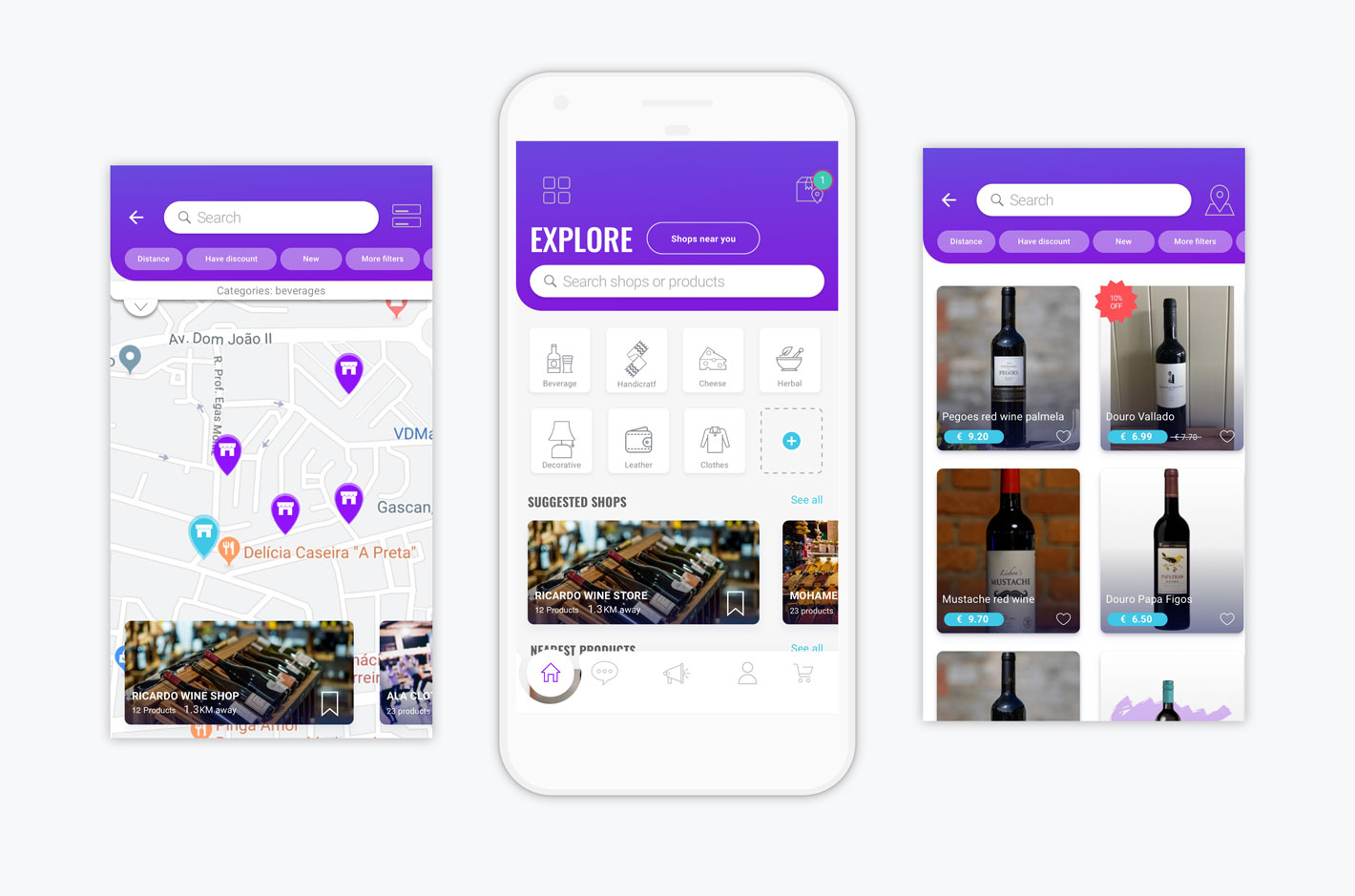
An app for customers to search for and buy products
And another app for local stores to manage their products directly on the app.
My role
- Senior Product designer
- developing value proposition canvas
- Turn complex requirements into epics
- and user stories
- Create fully functional prototypes
- developing a product roadmap
Objective
Understanding the real need of the users on both apps
And building an engaging experience for them.
There were many complex concepts for each
App(customer and store) that needed to be validated and simplified.
Research methods
- stakeholder and user interviews
- usability testing
- user journey map
- Persona
- Running workshops
- competitor analysis
- UX canvas
- Smart Shop app is one of the interesting Startup projects that I had a chance to collaborate with; Smart Shop is a B2C platform to help small shops all around the city efficiently sell their products.
- I was involved in the project from the very beginning. It was a great experience working with the team directly, defining the project roadmap, and doing all the workshops, from defining the problem to implementing the final project.
- So, where does the idea come from?
- It is clear to us that Portugal is a tourist destination for so many people all around the world. Besides, many local shops in every part of the cities offer excellent products at the best prices that nobody will know about. Because these local shops are usually small, they can not afford to do marketing properly to attract potential customers.
- With this in mind, we want to provide a platform for e-shoppers to find any premium products in every part of the city and buy many products from different stores simultaneously.
Small local shops sell premium products at the best prices. Nobody knows about them.
01 Idea
A platform for small shops, and the people nearby
ARD Smart Shop is a startup that helps small local shops sell more effectively. Customers can search for and buy premium products in their area and get them delivered home. The project had two parts: an app for customers and another for local stores to manage their products directly.
The idea came from Portugal, a destination for many tourists, where many local shops offer excellent products at the best prices that nobody knows about, because small shops cannot afford proper marketing. We wanted a platform where e-shoppers could find premium products in any part of the city and buy from many stores at once.
I was involved from the very beginning, defining the roadmap and running the workshops, from defining the problem to implementing the final product.
2
Apps: customer and store
7
Research and framing methods
6
Opportunities found in the journey map
1
Product roadmap
02 Alignment
Make the problem visual for everyone
To improve the understanding of the stakeholders and the whole team, designers and developers included, about user needs and project direction, I used the Lean UX canvas to state the problem in a more visual and interactive way. We had to think holistically about both sides. Then I filled out the business model canvas and the value proposition canvas.


Where others put up with problems, we, as designers, should fix them.
On the mindset for this project
03 Journey
Where the customer journey could improve
To understand behaviour at important touchpoints of the customer app, I created a user journey map in the middle of the process, based on data from our own customers and the persona defined at the start. The goal was not only to identify pain points but to maximise customer satisfaction. It showed six opportunities:

01
Better organise the product listing.
02
Improve the visual hierarchy of product details.
03
Improve the payment process.
04
Improve the discoverability of discounted products.
05
Add intuitive notifications for shop owners.
06
Investigate negotiating with a third-party delivery system.
04 Design
One design language for two apps
Visual inconsistencies are easy to spot. We asked whether the product looked like it had a unified design language, and whether all brand elements held together to tell one story, and started with the elements that most improved the experience.


05 Learn
Build, measure, learn, repeat
In the first iteration the team focused on making the idea real. The goal was not to sell the idea and make a profit right away, because the product probably did not fully serve customer needs yet. As designers we embrace that uncertainty: through iteration we get closer to a product that fits customers.
Build-Measure-Learn shortens the time to an MVP. We would adjust, or even pivot altogether, by measuring customer reactions against it.
Next
The journey had just started.
A startup case: from the idea to the first design, with learning built in.