Project
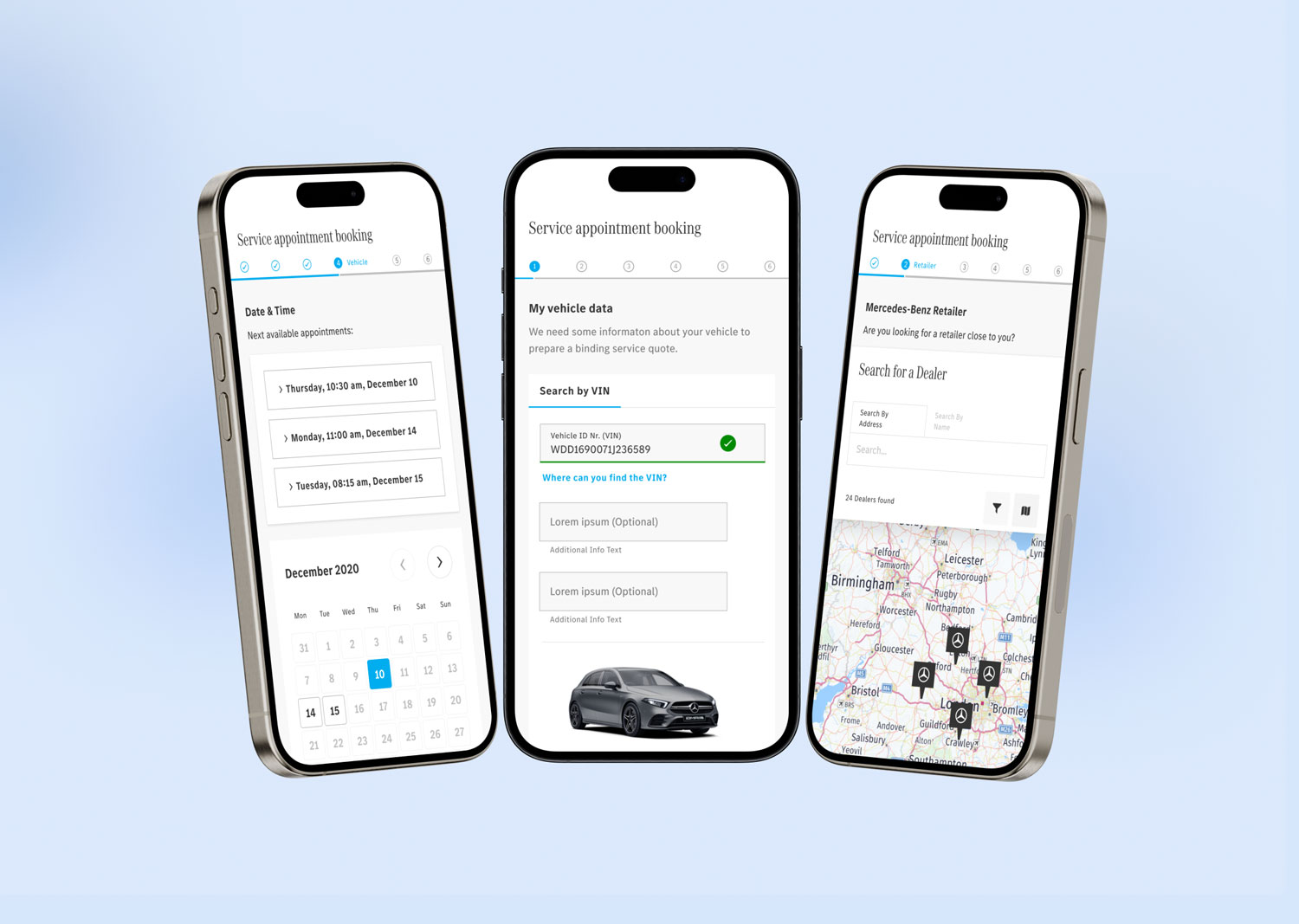
The Mercedes OAB (Aftersales Booking) a flagship project aimed at transforming how Mercedes-Benz customers engage with aftersales services. This app enables users to effortlessly book any service their vehicle may require, ranging from simple tasks like replacing a broken glass to more complex operations such as engine repair. The goal was to deliver a user-friendly and efficient platform that reflected Mercedes-Benz’s legacy of luxury and excellence while addressing the practical needs of its customer base.
My role
- Senior Product Designer/ Team Lead conducting different design workshops
- Responsible for all the processes of design, from problem persona building to design implementation
- Designing and conducting internal and external interviews with different user target groups
- conducting usability testing workshop
Objective
The primary objective of the project was to provide Mercedes-Benz customers with a seamless, intuitive, and efficient aftersales service experience. This would replace the cumbersome and time-consuming traditional methods of booking services through phone calls or in-person visits. We aimed to build a digital product that aligned with the brand’s high standards of convenience and performance while also meeting the business’s goal of streamlining aftersales processes and increasing customer satisfaction.
Research methods
- Participatory design
- Design Sprint
- Competitive Analysis
- Internal stakeholders interview
- Customer surveys
- Empathy mapping
A luxury customer needs a service. Booking it should feel as refined as the car.
01 Tension
From phone calls to a flagship booking experience
A customer of a luxury Mercedes-Benz needs to schedule a service, maybe a routine oil change, maybe an engine repair. Traditionally that meant long phone calls or a visit to the dealership.
The Aftersales Booking (OAB) app was created to change that: any service, booked in an effortless digital experience that matches the brand.
For the business
Standardise the aftersales portfolio, streamline service offerings and create upselling opportunities.
For the customer
Simplify booking, make it transparent and make it convenient.
The key challenge was balancing the two: maximising profitability while keeping the experience intuitive, seamless and satisfying. The product structure below guided the strategy.

02 Strategy
Three layers, one coherent offer
01
Standardise and simplify the offer for users: easy categories and transparent descriptions that build trust and informed decisions.
02
Optimise cross-selling and upselling for the business: contextual promotions and bundles that feel personal, not pushy.
03
Enhance the experience with convenience and mobility options: integrated mobility services and personalised reminders.
03 Design sprint
Mobility options, in the right moment
One of the hardest challenges was personalising mobility options in a way that fits the Mercedes-Benz standard. The task: rethink how customers book extras such as pick-up and delivery, or a replacement vehicle, and make it intuitive and personal.
We ran a five-day design sprint to break the complexity down. The goal was a user journey where mobility options appear contextually, at the right moment in the booking flow.
5
Day design sprint
3
Competitors benchmarked: Tesla, Porsche, Jaguar
6
Steps in the booking flow
3
Layers in the product strategy

04 Competitors
Borrowing the best from three brands
Tesla: automation
Convenience and automation, with features like remote diagnostics that pre-diagnose issues and streamline booking.
Porsche: luxury and personalisation
Detailed descriptions of service packages and premium mobility such as replacement vehicles and chauffeur services, reinforcing prestige and exclusivity.
Jaguar: clarity
A more traditional flow, but very clear, especially for choosing loan vehicles, with an emphasis on easy contact with service advisors.
From this analysis, we took three ideas into our own design: automation, personalisation and clarity.

05 Solution
A booking flow with progress, feedback and context
Decision 01
Start with the car, and let the interface react
Context
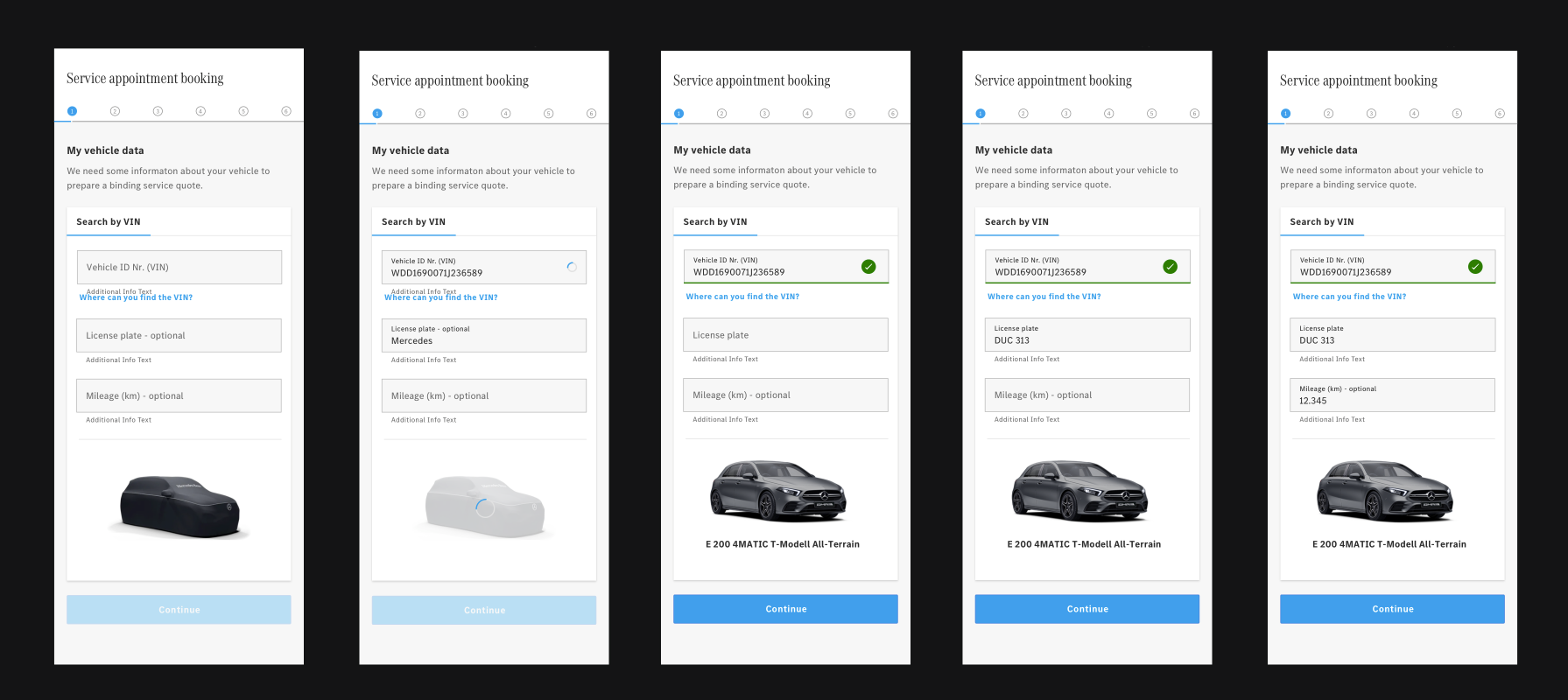
A binding service quote needs accurate vehicle data, and typing a VIN is a moment people doubt themselves.
The call
The first step asks for the VIN, with optional licence plate and mileage. The interface responds: a loading state, a confirmation tick and the recognised vehicle appearing.
What it did
People know immediately that the system understood their car, and Continue only activates when it is ready.
Decision 02
Bring services, time and mobility options into one calm sequence
Context
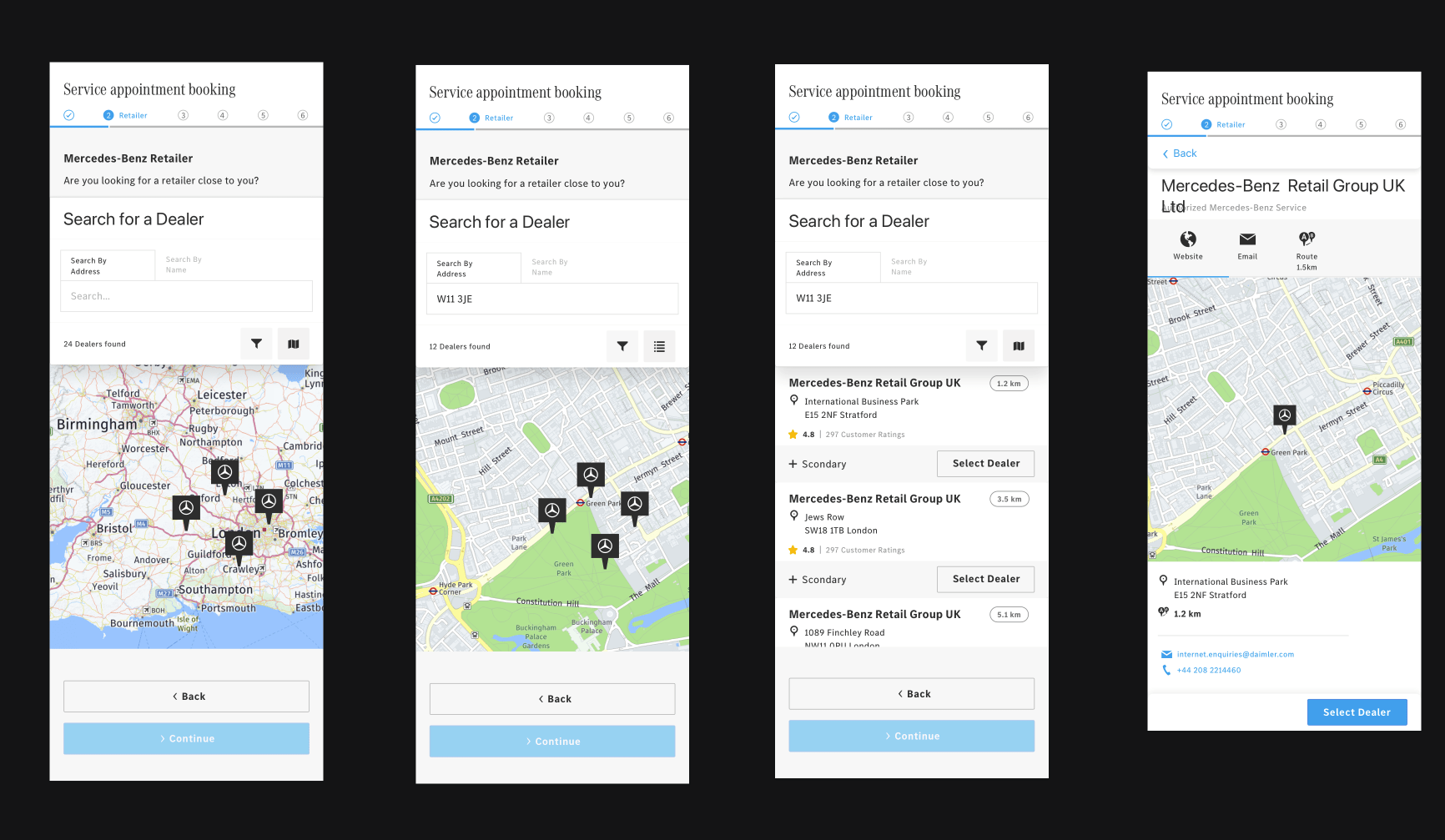
Services, dates and extras can feel like separate chores.
The call
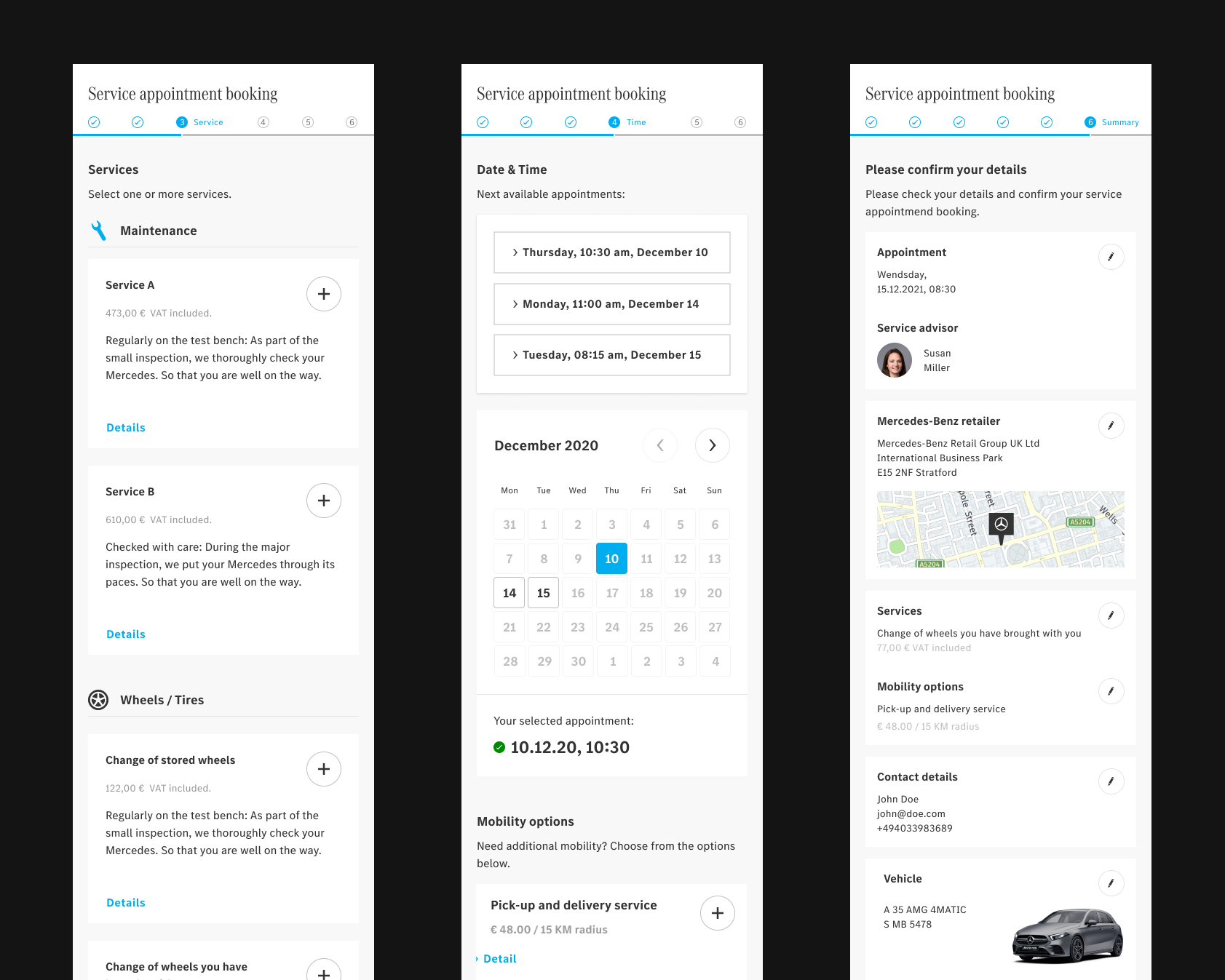
A six-step flow with a visible progress indicator. Services are grouped (maintenance, wheels and tires) with price and details, the date and time picker shows next available appointments, mobility options appear in context, and a summary lets users edit any detail before confirming.
What it did
A transparent, step-by-step booking that matches the brand’s standards.
Next
Convenience, with the brand intact.
OAB shows how I balance business goals and user needs: strategy first, then the details that make a luxury product feel effortless.